| Inglés |
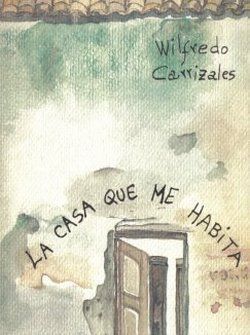 Portada de la edición impresa de La casa que me habita, de Wilfredo Carrizales (Editorial La Lagartija Erudita; Pekín, 2004).
Wilfredo Carrizales La casa que me habita / The House that Inhabits Me
Presentación
¡Comparte este contenido!


Venezuelan poet, sinologist, photographer, draftsman, monologuist, fiction writer, columnist, translator, editor, and cultural promoter Wilfredo Carrizales was born in 1951 in the city of Cagua in the northern state of Aragua, where he has spent the majority of his life. An avid scholar of the language, literature, history, and culture of China, Carrizales studied in Beijing from 1977 to 1982 and returned there in 2001, serving as Cultural Aggregate in the Venezuelan embassy from 2001 to 2007. Carrizales has translated numerous volumes from the Chinese, both classical and modern, and his original works include Ideogramas; Calma final; Mudanzas, el hábito; Textos de las estaciones; Postales; Desde el cinabrio; Vestigios en la arena; Intromisiones, radiogramas y telegramas; Merced de umbral and La casa que me habita, which received the 2006 National Book Award of Venezuela. La casa que me habita is a work at once both meditative and dynamic, pensive and deeply vibrant. Its forty prose poem sections are philosophical, one might say phenomenological: probing the relationship of the self to the body and to the world. Like Thomas Traherne, who wrote, “The world was more in me than I in it,”1 for Carrizales the setting of the book is The House that Inhabits Me, not The House I Inhabit. It raises a familiar paradox, then, when we learn as the book progresses that the house that inhabits him also contains the poet as well.
The book is not simply philosophical, however; it is in equal measures erotic and, one might say, ecological—a celebration of a world in which every part is animate, from the architecture to the flora to the forces of nature, the poet himself, and his beloved. It’s a statement about the role and nature of the self in a body/world in which so much is outside our conscious awareness or control. Some of these events seem entirely foreign or alien; others we take to be “ours” or even “us.” Carrizales avoids easy answers and focuses instead on the richness, quirkiness and complexity of the interchange. Indeed, events which offer multiple interpretations and which require scrutiny both as a translator and as a reader occur frequently in the text; multiple meanings are heaped up in astonishing ways:
Here, se cuece means “cooks,” “boils,” or “roasts,” but also more informally can mean “gets drunk.” At first, only the primary meaning seems to apply, until we learn that the rooster is, in fact, ebrio, “inebriated.” And this mezcla de vinos (“mixture of wines”) in which he makes his announcement, is it simply a description of the dawn sky? Perhaps the rooster is neither cooked nor intoxicated, merely stunned by the light: in English blind and drunk are related, and anexpression like ebrio de alegría could be rendered as blind with joy, for instance. Carrizales steers us away from making our minds up too quickly, choosing instead to make the ambiguities exuberant—in all senses of the word: abundant, fertile, and joyous. One of the challenges and thrills in translating Carrizales is trying to keep up with his wordplay and still retain his tone, which even in the most abstruse or knotted passages remains fluid and conversational. Sometimes the wordplay gets downright dizzying:
The switch from the verb recurro (“I resort”) to the verb recorro (“I cross”) is only a part of a broader swath of repeated sounds and interconnections, most significantly the repeated r’s and d’s: recurro, recóndito, recorro, regresar, descubro, descubrimiento, derruido, rincón. Of course in a translation there is a trade-off between staying true to the lyricism of the language and staying true to its exact meaning. I’ve tried to negotiate a balance, using turn to / turn over / return / torn to mimic recurro / recorro / regresar / derruido rincón and adding the repeated “or” sound in before / torn / corner / courtyard:
A literal translation in the Nabokovian school of thought —“The clumsiest literal translation is a thousand times more useful than the prettiest paraphrase”—2 would never do a passage like this any justice whatsoever. Never mind the philosophical intractability of defining a “literal translation” in the first place; a rendering of this passage that didn’t suggest a connection among the various verbs as suggested by their sounds would be a paraphrase at best, and only a partial one at that. The reason is that these sorts of verbal connections are more than simply Carrizales exercising his dexterity as a wordsmith, more than dazzling pyrotechnics; they are essential to both the character and the aims of the book. Carrizales’ use of language suggests the same thing as his trope of the house whose walls, plants, furniture, and even air are animate: a lush and elaborate world, both inside the body and out, where everything is at once operating with its own force and as part of a coordinated and self-orchestrated unfolding.
|
 Brian Christian